What is Competitive Pricing? A SaaS Founder's Guide (2026)
Competitive pricing is the most common starting point for SaaS founders, but most get it wrong. This guide covers what competitive pricing actually means in SaaS, when it works, when it backfires, and how to use competitor data without letting it dictate your strategy.

Ask a SaaS founder how they set their pricing and you will hear some version of the same answer: "I looked at what competitors charge and priced somewhere nearby."
That is competitive pricing. And it is the most common starting point in SaaS for good reason; it is fast, it is defensible, and it keeps you in the right ballpark.
The problem? Most founders stop there. They treat a starting point as a final answer, and that is how you end up stuck at $29/month for three years while competitors raise prices around you.
This guide covers what competitive pricing actually means in SaaS, how it differs from the textbook definition, when it works, when it backfires, and how to use competitor data as an input to smarter pricing decisions.
What is Competitive Pricing?
Competitive pricing is a pricing strategy where you set your prices based on what competitors charge for similar products or services. Instead of calculating costs and adding a margin (cost-plus pricing) or measuring the value your product creates for customers (value-based pricing), you use the market as your primary reference point.
The concept is straightforward: if five project management tools charge between $8 and $15 per seat per month for their mid-tier plan, competitive pricing says your mid-tier should fall somewhere in that range, unless you have a specific reason to be above or below it.
In traditional markets, competitive pricing is simple. Gas stations on the same street match each other's prices. Supermarkets track competitors' weekly specials. Airlines adjust fares in real time based on route competition.
In SaaS, it is more nuanced.
Why Competitive Pricing is Different in SaaS
SaaS products are not commodities. Unlike gasoline or airline seats, two SaaS tools rarely deliver the same value in the same way. This creates a fundamental problem with pure competitive pricing: the prices you are benchmarking against reflect different products with different value propositions serving different customer segments.
Three factors make competitive pricing in SaaS more complex than in traditional markets:
⦿ Tier structures vary widely. One competitor might have 3 tiers, another might have 5. Comparing "mid-tier" prices is meaningless without understanding what each tier includes.
⦿ Value metrics differ. One tool charges per seat, another charges per usage, a third charges a flat fee. You cannot directly compare a $10/seat/month tool with a $99/month flat-fee tool without knowing team sizes.
⦿ Feature gates change the equation. A competitor priced at $15/seat might gate a critical feature behind their $30 tier. Their stated price is not their effective price for most buyers.
This is why competitive pricing analysis software designed for SaaS needs to compare tier structures, not just price points.
How Competitive Pricing Works in SaaS
When SaaS founders use competitive pricing, they typically take one of three approaches.
1. Price Below Competitors (Penetration Positioning)
You enter the market with prices lower than established alternatives to capture market share quickly.
SaaS example: When Linear launched, it priced below Jira to attract developers frustrated with Jira's complexity. Tierly's analysis of Linear's pricing shows this approach scoring 7.4/10. The strategy works when your product genuinely solves the same problem with less friction. Linear's lowest-paid tier starts at $8/seat/month versus Jira's $7.75/seat, but Linear's free tier is significantly more generous, effectively undercutting Jira's entry point.
When it works: Entering established markets where incumbents have gotten comfortable with high prices and customers are actively looking for alternatives.
Risk: Signals lower quality and makes it harder to raise prices later. Customers acquired on price leave on price.
2. Match Competitor Prices (Parity Positioning)
You set prices at or near competitor levels and compete on factors other than price: features, UX, support, integrations.
SaaS example: Notion and ClickUp both use competitive parity positioning in project management. Notion prices its Plus tier at $10/seat/month while ClickUp charges $7/seat; close enough that buyers choose based on features (databases vs task management) rather than price. Tierly's Notion pricing teardown shows how pricing near competitors lets product quality differentiate.
When it works: Commoditized categories where buyers expect prices within a certain range and the purchasing decision hinges on product fit rather than cost.
Risk: Removes price as a differentiator. If your product is not genuinely better on other dimensions, you become interchangeable.
3. Price Above Competitors (Premium Positioning)
You deliberately set prices higher than alternatives to signal superior value, better support, or enterprise readiness.
SaaS example: Intercom prices its Essential plan at $29/seat/month while competitors like Freshdesk offer similar entry-level plans at $15/agent/month. Tierly's Intercom pricing analysis scores Intercom at 7.1/10. The premium positioning works because Intercom bundles an AI agent (Fin) that competitors do not match at any tier.
When it works: You have genuine differentiation that customers recognize and value. Your brand, ecosystem, or capabilities justify the premium.
Risk: Limits your addressable market. You must consistently deliver on the premium promise, or churn accelerates.
Competitive Pricing in Practice: Real SaaS Examples
Most competitive pricing articles use retail examples: gas stations, fast food chains, fitness trackers. Those are not relevant to SaaS founders making tier structure decisions.
Here are real examples from Tierly's analysis of SaaS products, showing how competitive pricing plays out in actual tier structures:
Mid-Tier Competitive Pricing Comparison
| Product | Mid-Tier Price | Tierly Score | Pricing Position |
|---|---|---|---|
| ClickUp (Unlimited) | $7/seat/mo | 7.4/10 | Below market — aggressive penetration |
| Linear (Plus) | $8/seat/mo | 7.4/10 | Below market — premium-feel at low price |
| Notion (Plus) | $10/seat/mo | 7.3/10 | Market match — balanced positioning |
| Airtable (Plus) | $20/seat/mo | 7.3/10 | Above market — enterprise positioning |
| Asana (Advanced) | $13.49/seat/mo | 6.8/10 | Above average — brand premium |
| Intercom (Essential) | $29/seat/mo | 7.1/10 | Premium — AI differentiation |
Notice that the highest Tierly scores do not belong to the cheapest products or the most expensive ones. ClickUp and Linear tie at 7.4/10: one by being aggressively cheap, the other by delivering premium UX at a low price. Intercom scores 7.1/10 at nearly 4x the price of ClickUp because its AI positioning justifies the premium.
The insight: Competitive pricing is not about being cheapest. It is about being appropriately positioned relative to your actual value delivery.
Advantages of Competitive Pricing
Competitive pricing remains popular in SaaS for real reasons. Here is where it genuinely helps:
✦ Lower Market Risk
Pricing within the range customers already accept means fewer surprises. If every project management tool charges $8-15/seat for mid-tier, pricing at $12 will not shock anyone. You avoid the risk of pricing yourself completely out of the market.
✦ Faster Time to Market
When you need to launch quickly, competitor prices give you a defensible starting point. You can always adjust later with more data. Startups launching an MVP often cannot afford the time required for proper willingness-to-pay research.
✦ Easy Customer Comparison
When your pricing is in the same range and structure as competitors, customers can compare on product merits. This benefits companies whose product is genuinely better, removing price objections lets quality speak.
✦ Market-Appropriate Positioning
Competitor prices reflect real market information about what customers are willing to pay. A market where competitors charge $50-200/seat/month tells you something important about buyer budgets and expectations in that category.
✦ Defensible to Stakeholders
"Our pricing is competitive with market alternatives" is an answer that satisfies boards, investors, and sales teams. It is harder to justify pricing that deviates dramatically from the market without strong supporting data.
Disadvantages and Risks of Competitive Pricing
Here is where competitive pricing breaks down, particularly in SaaS:
☒ Margin Erosion
If competitors are pricing irrationally — burning VC cash to buy market share, for example — matching their prices means inheriting their economics. Many SaaS companies leave 5-15% of ARR on the table because they anchor to competitor prices rather than customer value.
☒ The Commoditization Trap
Pricing like competitors signals that you are like competitors. If your product is genuinely differentiated, competitive pricing undermines your positioning. Customers start treating your product as interchangeable when your prices say it is.
☒ Ignoring Your Unique Value
Your competitors may have different cost structures, target different segments, or optimize for different metrics. A VC-funded competitor burning cash to acquire market share has different pricing incentives than a bootstrapped company optimizing for profitability. Matching their prices means adopting their strategy by default.
☒ Vulnerability to Price Wars
When everyone watches everyone else's pricing, a single aggressive move can trigger a race to the bottom. Among the top 500 SaaS and AI companies, there were over 1,800 pricing changes in 2025 alone. If your pricing is reactive, you are on a treadmill.
☒ Short-Term Thinking
Competitive pricing optimizes for today's market. But SaaS markets shift rapidly. Usage-based pricing, AI-powered features, and hybrid billing models are rewriting the rules. A competitive price set in January may be obsolete by June if your category undergoes a pricing model shift.
The best SaaS companies don't just monitor competitor prices. They use competitive intelligence to inform value-based decisions. Your competitors' pricing tells you where the market is today. Your customers' willingness to pay tells you where it should be.
Competitive Pricing vs Other SaaS Pricing Strategies
Competitive pricing is one of four major pricing strategies. Understanding the alternatives helps you choose the right approach or, more likely, the right combination.
| Aspect | Competitive Pricing | Value-Based Pricing | Cost-Plus Pricing | Penetration Pricing |
|---|---|---|---|---|
| Reference point | Competitor prices | Customer value | Your costs | Below-market entry |
| Best for SaaS when | Commoditized market | Differentiated product | Rarely appropriate | Entering established market |
| Data required | Competitor pricing data | Customer research | Cost accounting | Market price baseline |
| Primary risk | Commoditization | Misjudging value | Ignoring market | Unsustainable margins |
| Time to implement | Fast (days) | Slow (weeks-months) | Fast (days) | Fast (days) |
| Revenue optimization | Moderate | High | Low | Low initially |
Competitive Pricing vs Value-Based Pricing
This is the most important comparison for SaaS founders. Value-based pricing sets prices based on the measurable outcome your product delivers to customers. If your tool saves a customer 10 hours per week worth $50/hour, value-based pricing says you can charge a meaningful fraction of that $500/week savings.
The challenge? Value-based pricing requires deep customer research: surveys, willingness-to-pay studies, win/loss analysis. Most startups do not have this data at launch.
The practical hybrid: Use competitive pricing to set your range, value-based pricing to pick your position within it. If competitors charge $10-20/seat and your customer research shows willingness to pay $25, price at $20-22, competitive enough to not shock buyers, but capturing more value than a pure competitive approach would suggest.
For a deeper comparison of how different SaaS companies implement these strategies, see our competitive pricing strategy guide.
Competitive Pricing vs Cost-Plus Pricing
Cost-plus pricing adds a markup to your costs. In SaaS, this rarely makes sense because marginal costs per customer are extremely low (pennies of cloud compute), while fixed costs (engineering, R&D) are high. A cost-plus model would either underprice dramatically or require arbitrary margin targets that ignore market reality.
Competitive Pricing vs Penetration Pricing
Penetration pricing is a subset of competitive pricing. Specifically, pricing below competitors to gain market share. It is a temporary tactic, not a permanent strategy. ClickUp used penetration pricing to challenge Monday.com and Asana, offering dramatically lower prices plus a generous free tier. The risk: once customers expect low prices, raising them triggers churn.
The Competitive Pricing Decision Matrix for SaaS
Not every SaaS company should use competitive pricing as their primary approach. Here is a decision framework:
Use Competitive Pricing When:
✓ You are entering an established category with well-known price expectations. If customers already know what project management tools "should" cost, deviating dramatically creates unnecessary friction.
✓ Your product is functionally similar to existing alternatives. If the core features overlap significantly and your differentiation is in UX, speed, or design rather than capability, competitive pricing keeps you in consideration.
✓ Buyers actively compare before purchasing. In categories where comparison shopping is the norm, think CRM, project management, helpdesk, competitive pricing ensures you appear reasonable in side-by-side evaluations.
✓ You need to price quickly at launch. If you are launching next week and have no customer pricing data, competitor prices give you a defensible starting point. You can refine later.
✓ Your market has high price transparency. When every competitor publishes pricing pages and G2/Capterra show pricing comparisons, competitive positioning is table stakes.
Avoid Relying on Competitive Pricing When:
☒ You have genuine differentiation that customers recognize. If your AI-powered feature, unique integration, or proprietary data creates value no competitor matches, competitive pricing undervalues you.
☒ You serve a niche segment. If your product targets a specific vertical (healthcare compliance, fintech onboarding) where general competitor prices are irrelevant to your buyers' budgets and needs.
☒ Your competitor is pricing irrationally. VC-backed competitors burning cash to buy market share are not rational reference points. Matching their prices means inheriting their unsustainable economics.
☒ The pricing model itself is your differentiator. If you are introducing usage-based pricing in a seat-based market, or offering a free tier where none exists, your competitive advantage is the pricing structure, not the price point.
☒ You have willingness-to-pay data. If you have done the work to understand what customers value and what they will pay, use that data. It is more valuable than any competitor's pricing page.
How to Get Competitive Pricing Intelligence
Whether you use competitive pricing as your primary strategy or as an input to value-based decisions, you need reliable competitor data. Here is how to build a systematic competitive pricing intelligence process:
Step 1: Identify Your Competitive Set
Map 5-7 direct competitors and 2-3 indirect alternatives. Include:
- Direct feature competitors (tools that do the same thing)
- Category leaders (even if they serve different segments)
- Emerging challengers (newer tools gaining traction)
For a structured approach to competitor identification, see our guide on writing a competitive intelligence report.
Step 2: Document Tier Structures
For each competitor, capture:
- Tier names, prices (monthly and annual), and feature lists
- Usage limits (seats, storage, API calls)
- What gates upgrades between tiers
- Enterprise pricing approach (published vs custom quotes)
- Any recent pricing changes
Step 3: Analyze Competitive Positioning
Go beyond raw prices. Use a structured scoring framework, like Tierly's 6-attribute pricing audit, to evaluate how competitors score on tier naming, price perception, feature density, billing flexibility, and more.
Step 4: Build a Monitoring System
Pricing is not static. Set up ongoing monitoring:
✓ Quarterly manual reviews of competitor pricing pages
✓ Automated alerts for pricing page changes (using tools like competitive pricing tools or Visualping)
✓ AI-powered analysis that scores and compares tier structures automatically - this is what pricing intelligence platforms like Tierly are built for
Step 5: Turn Intelligence into Action
Competitive pricing data is only valuable if you act on it. After collecting data, ask:
- Are we priced within the range customers expect for our category?
- Where do we offer more value than competitors at the same or lower price?
- Where are we charging more without clear justification?
- Which competitor pricing changes should trigger a response from us?
The answers feed your pricing decisions: whether you follow a competitive pricing strategy, a value-based approach, or a hybrid of both.
FAQ
What is competitive pricing with an example?
What are the advantages and disadvantages of competitive pricing?
What is the difference between competitive pricing and value-based pricing?
When should a SaaS company use competitive pricing?
How do you monitor competitor pricing for SaaS?
Is competitive pricing the same as price matching?
Competitive Pricing is a Starting Point, Not a Strategy
Competitive pricing answers a useful question: What does the market charge for products like mine? That information is valuable. Every SaaS founder should know it.
But the question it does not answer is more important: What should I charge based on the value I create?
The best SaaS companies treat competitive pricing as intelligence — an input that informs decisions, provides context, and keeps them aware of market dynamics. They do not treat it as the decision itself.
Here is the practical takeaway:
✦ Start with competitive pricing to set a defensible range at launch
✦ Layer in value-based insights as you collect customer data
✦ Build a monitoring system so your competitive intelligence stays current
✦ Revisit quarterly because the market moves (over 1,800 SaaS pricing changes happened in 2025 alone)
✦ Use structured scoring rather than gut feel to evaluate how your pricing compares
Your pricing page is the only page on your website that directly creates revenue. Make sure the numbers on it reflect both the market you compete in and the value you deliver.
Go deeper on how to build a competitive pricing strategy with the 5 C's framework and step-by-step implementation.
Compare the top tools for automating competitive pricing analysis and tier structure benchmarking.
Score your pricing page against competitors using a structured 6-attribute framework with real examples.
Related Posts

How to Audit Your SaaS Pricing Page (6-Attribute Framework)
A practical 6-attribute scoring framework for auditing SaaS pricing pages, with a real Airtable worked example showing exactly how to evaluate tier names, prices, descriptions, billing periods, seats, and features against competitors.
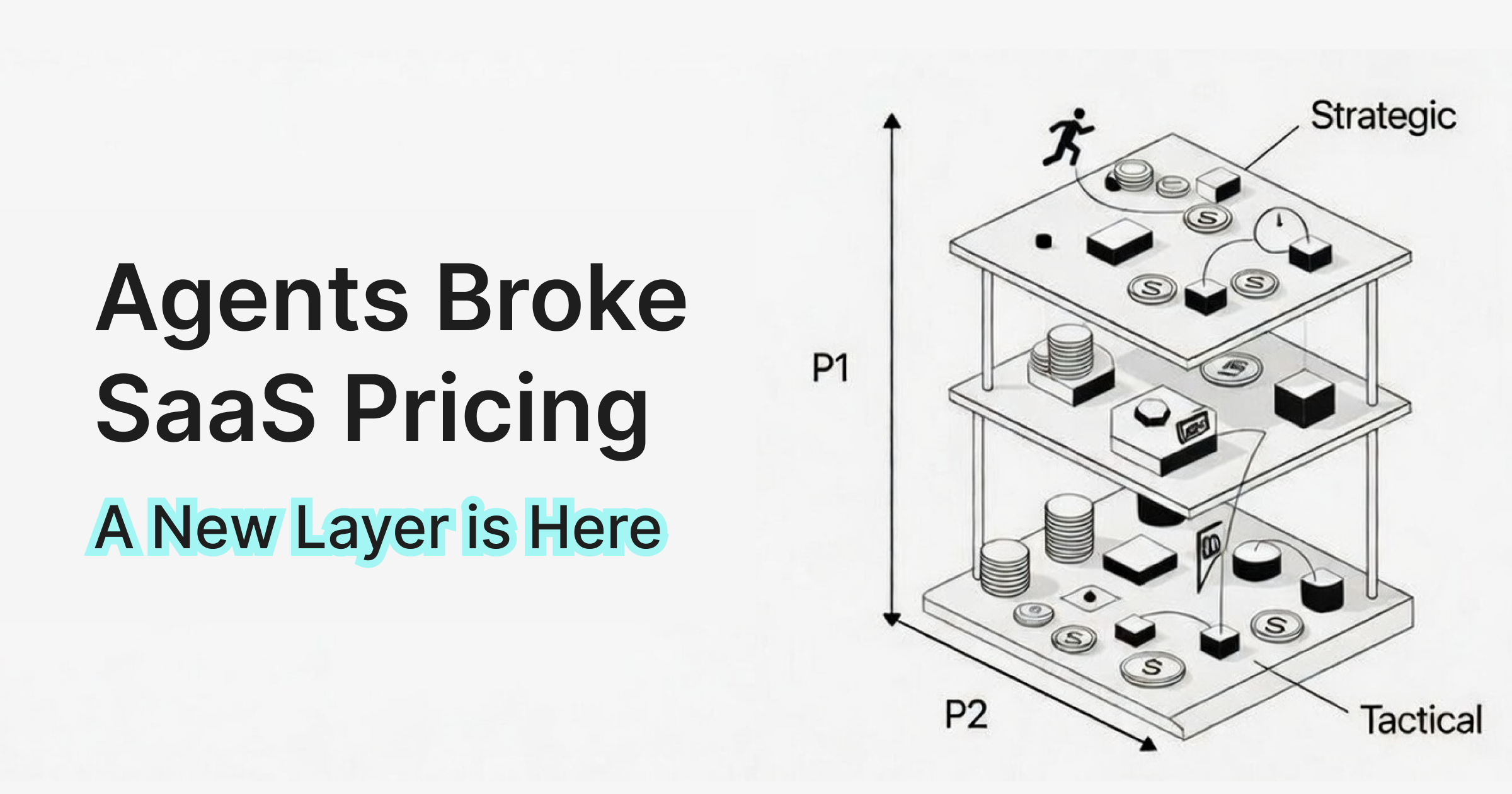
SaaS Pricing Analysis: How Dual-Layer Scoring Works
A worked example of dual-layer pricing analysis using Intercom's real data. See how tactical scoring (6 attributes) and strategic assessment (5 dimensions) combine into a single score that reveals what neither layer catches alone.
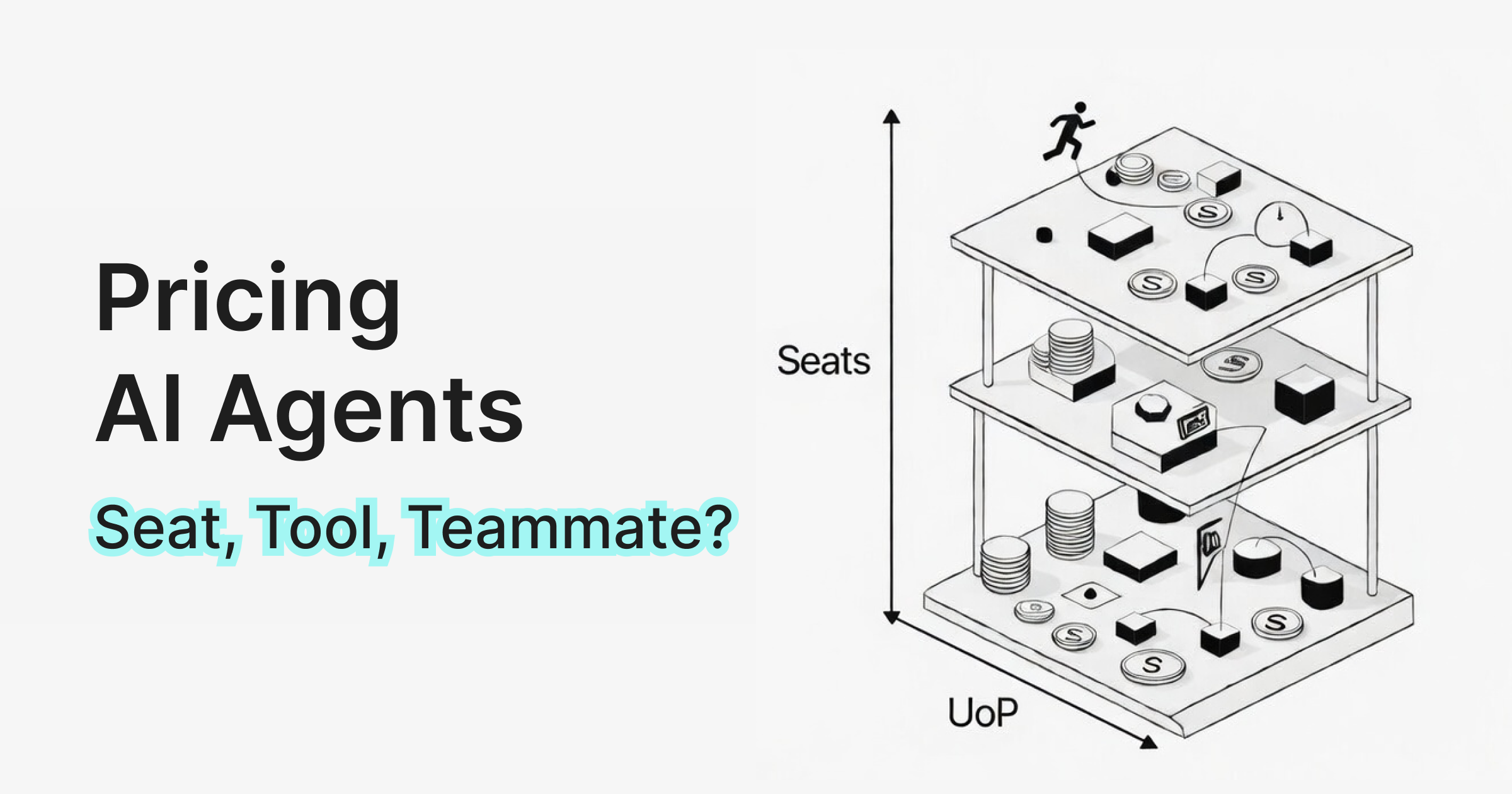
How to Price AI Agents: Seat, Tool, or Teammate?
Most AI agent pricing fails because founders pick a billing model before deciding what their agent actually is. This framework gives you a structured way to classify your agent and match it to the right pricing architecture.