Per-Seat vs Usage-Based Pricing: How to Choose for SaaS
Seat-based pricing is under pressure from AI and usage-based models. This guide breaks down when each model works, the hybrid approach most SaaS companies are adopting, and a framework for making the right choice.

"Seat-based pricing is dying" is one of the loudest takes in SaaS right now. Reddit threads from this past week have founders asking if per-seat pricing is a "suicide mission" for AI-integrated products. Medium posts declare the "death of seat-based pricing" as settled fact.
The reality is more interesting than the headlines.
What Is Per-Seat Pricing?
Per-seat pricing (also called per-user pricing) charges customers based on the number of people accessing the software. One user, one license, one line item on the invoice.
How it works:
-
Starter: $10/user/month
-
Professional: $25/user/month
-
Enterprise: custom per-user pricing
The model's strength is its simplicity. Buyers understand it instantly. Finance teams can forecast it. Sales reps can quote it on the spot.
Companies using per-seat pricing: Slack, Salesforce CRM, Asana, Jira, Figma (for its core product), Microsoft 365, Notion, Linear
Per-seat pricing dominated SaaS for a reason: throughout the 2010s, software value genuinely scaled with team size. More people in Slack meant more conversations, more channels, more value. More seats in Salesforce meant more pipeline coverage.
That equation held until AI showed up.
What Is Usage-Based Pricing?
Usage-based pricing charges customers based on how much they consume. Instead of counting humans, you count outputs: API calls, workflow runs, credits spent, data processed, or AI actions performed.
How it works:
-
Pay per API call ($0.01 per request)
-
Pay per credit consumed (1 AI report = 10 credits)
-
Pay per workflow execution (1 automation run = 1 count)
Companies using usage-based pricing: Snowflake, Twilio, OpenAI, AWS, Stripe (per transaction), Vercel
Usage-based pricing took off first in infrastructure (AWS, Twilio) where costs genuinely track with consumption. The model is now spreading to application-layer SaaS as AI features introduce variable costs that per-seat pricing cannot absorb.
Per-Seat vs Usage-Based: Direct Comparison
| Factor | Per-Seat Pricing | Usage-Based Pricing |
|---|---|---|
| Revenue predictability | High (fixed MRR per user) | Lower (varies month to month) |
| Sales simplicity | Easy to quote and forecast | Requires usage estimators |
| Enterprise appeal | Strong (budget-friendly) | Weaker (hard to forecast spend) |
| Value alignment with AI | Poor (decouples from output) | Strong (charges for work done) |
| Expansion revenue | Linear (grows with headcount) | Exponential (grows with product adoption) |
| Churn visibility | Clear (seat cancellation) | Gradual (usage decline) |
| Cost alignment | Weak (same price regardless of usage) | Strong (scales with your costs) |
| Implementation complexity | Simple (user provisioning) | Complex (metering, billing, notifications) |
Neither model is universally better. The right choice depends on three things: your cost structure, your buyer, and how your product delivers value.
Why AI Changes the Equation
For 15 years, per-seat pricing and SaaS value scaled together. AI broke that alignment.
Here is the core problem: when one user with an AI agent does the work that previously required five people, per-seat pricing creates a lose-lose dynamic.
☒ The buyer pays less but gets more. They reduce headcount, cancel seats, and your revenue drops even as they extract more value from your product.
☒ The seller gets punished for delivering value. The better your AI features work, the fewer seats customers need. You have built a product that erodes its own revenue model.
This is not a theoretical concern. Bain & Company analyzed 30+ SaaS vendors introducing generative AI capabilities and found that only 35% simply increased per-seat prices. The other 65% are layering usage-based AI metrics on top of existing seat pricing. None have fully abandoned seats, but the majority are building hybrid billing models.
SaaStr reports that companies are already downgrading seat counts as AI agents enter production. When 12 AI agents replace tasks that required human seats, the seat-based revenue model starts shrinking.
The question is not whether per-seat pricing is dead. It is whether per-seat pricing alone is enough.
When Per-Seat Pricing Still Works
Per-seat pricing is far from obsolete. It remains the right model in several clear situations.
✦ Value Scales with Team Size
If adding users directly increases the product's value, seats make sense. Collaboration tools like Slack, Notion, and Figma fall here. More people in the workspace means more conversations, more documents, more designs. The network effects justify the per-user charge.
✦ Costs Are Predictable Per User
When your infrastructure costs scale roughly linearly with user count (not usage patterns), per-seat pricing keeps things simple. CRMs, project management tools, and HR software typically cost you about the same per user regardless of how much each person clicks around.
✦ Your Buyers Are Enterprise
CFOs and procurement teams build annual budgets. They want a number they can plan around. "300 seats at $25/seat = $90,000/year" is simple. "Estimated 450,000 credits at variable rates depending on feature mix" is a procurement nightmare.
✦ Simplicity Is a Competitive Advantage
If your competitors have confusing, hard-to-predict pricing (credits, operations, tokens), being the simple per-seat option can win deals on clarity alone. Sometimes the best pricing strategy is the one buyers can explain to their boss in one sentence.
In a great market -- a market with lots of real potential customers -- the market pulls product out of the startup.
If your market expects per-seat pricing and your product genuinely delivers more value with more users, follow the market's pull. Don't overcomplicate pricing because a Medium post told you seats are dead.
When Usage-Based Pricing Works Better
Usage-based pricing shines in specific conditions. If several of these apply to your product, it may be the right primary model.
✦ Your Product Includes AI That Does Independent Work
AI agents, automated workflows, and background processing all generate value without a human actively using the product. Per-seat pricing has no way to capture this value. Credits, workflow executions, or AI actions can.
We covered this in detail in our guide on usage-based pricing for SaaS. The PricingSaaS 500 Index found that 79 SaaS companies now use credit-based pricing, up 126% year-over-year. The shift is real and accelerating.
✦ Your Costs Vary Significantly Per Action
If an AI image generation costs you $0.04 while a text query costs $0.002, flat per-seat pricing forces you to either underprice heavy users or overprice light users. Usage-based pricing aligns your revenue with your costs, protecting margins at every scale.
✦ Usage Is Sporadic or Seasonal
Some products see intense usage during planning cycles or campaign launches, then go quiet. Competitive intelligence tools, analysis platforms, and consulting-adjacent products often have this pattern. Usage-based pricing accommodates natural cycles without forcing customers to pay monthly for something they use quarterly.
✦ There Is 100x Variance Between Users
When your smallest customer does 10 actions per month and your largest does 10,000, you need either 15 pricing tiers or a usage-based model. Credits and metered billing handle this variance naturally without creating a pricing page that looks like a spreadsheet.
The Hybrid Model: What Most SaaS Companies Should Consider
Pure seats and pure usage are both extremes. The middle ground, hybrid pricing, is where most modern SaaS companies are landing.
According to Maxio's 2025 SaaS Pricing Trends Report, companies using hybrid models report the highest median growth rate at 21%, outperforming both pure subscription and pure usage-based models. BetterCloud's SaaS industry research found that 46% of SaaS companies already blend subscriptions with variable charges.
✦ How Hybrid Pricing Works
The structure is straightforward: a base subscription (per-seat or flat) provides predictable revenue and budget certainty for buyers, while a usage component captures value from power users and variable-cost features.
Hybrid Pricing in Practice
| Company | Base Component | Usage Component | Why It Works |
|---|---|---|---|
| Salesforce Agentforce | $125/user/month | Flex Credits (~$0.005/AI action) | Seats for CRM access, credits for AI work |
| Microsoft Copilot | $30/user/month | Additional credits for heavy usage | Seat base for budget, credits for AI spikes |
| HubSpot | Platform tiers ($800+) | 10-100 AI credits per task | Subscription for features, credits for AI |
| Zoom | Per-seat pricing | AI bundled into higher tiers | Simple seats with AI included in premium |
| Snowflake | Platform access fee | Consumption-based compute | Access fee for predictability, pay for compute |
✦ Three Hybrid Structures
1. Seat Base + Credit Packs
Include a credit allocation with each subscription tier. Heavy users buy more credits.
- Starter ($29/mo, 1 seat): 100 credits included
- Pro ($79/mo, 5 seats): 500 credits included
- Additional credits: $10 per 100
2. Seat Base + Overage Billing
Set monthly usage limits per tier. Charge per-unit overage when customers exceed them.
- Pro: 1,000 API calls included, $0.01 per additional call
3. Seat Base + Feature-Specific Metering
Keep most features unlimited, but meter expensive or variable-cost features separately.
- Unlimited core editing, but AI-powered features consume credits
We compared credit-based and monthly limit approaches in our guide on credits vs monthly pricing. The hybrid approach takes the best of both.
Decision Framework: 7 Questions to Pick Your Model
Not every product needs to rebuild its pricing. Use these questions to determine what fits your situation.
Per-Seat vs Usage-Based Pricing Decision Framework
Score each question, then tally your results
1. Does your product's value increase when more people use it?
Yes (collaboration, communication, project management) = +1 Seat
No (analytics, AI tools, infrastructure) = +1 Usage
2. Are your costs per user roughly equal regardless of what they do?
Yes (same infrastructure per user) = +1 Seat
No (costs vary 10x+ between light and heavy users) = +1 Usage
3. Does your product include AI features that work independently of users?
No (human-driven workflows only) = +1 Seat
Yes (AI agents, background automation, generative features) = +1 Usage
4. Who is your primary buyer?
Enterprise procurement / CFOs (need predictable budgets) = +1 Seat
Developers / technical users (comfortable with metered billing) = +1 Usage
5. How much does usage vary between your customers?
Low variance (most users are similar) = +1 Seat
High variance (100x difference between light and power users) = +1 Usage
6. What does your market expect?
Competitors all use per-seat = +1 Seat
Competitors use credits, tokens, or consumption = +1 Usage
7. How important is revenue predictability right now?
Raising funding or in enterprise sales motion = +1 Seat
Still experimenting or pre-PMF = +1 Usage
Scoring:
- 5-7 Seat points: Per-seat is your primary model
- 5-7 Usage points: Usage-based is your primary model
- 3-4 on both sides: Hybrid is the right answer
Real Examples: Per-Seat vs Usage Across SaaS Categories
Different SaaS categories have settled on different models for good reasons.
| SaaS Category | Dominant Model | Why | Examples |
|---|---|---|---|
| CRM | Per-seat | Value scales with sales team size | Salesforce, HubSpot, Pipedrive |
| Collaboration | Per-seat | Network effects drive adoption | Slack, Notion, Asana |
| Design | Per-seat + credits | Core editing is per-user, AI features are variable cost | Figma, Canva |
| Automation | Usage-based | Value comes from workflow output, not users | n8n, Zapier, Make |
| AI/ML Tools | Usage-based or credits | Compute costs vary per request | OpenAI, Anthropic, Jasper |
| Data Infrastructure | Consumption-based | Costs track directly with data processed | Snowflake, Databricks |
| DevOps | Hybrid | Platform access + metered compute | Vercel, AWS, Datadog |
The pattern is clear: products where humans collaborate trend toward seats. Products where software works independently trend toward usage. Products with both trend toward hybrid.
Common Mistakes Founders Make
☒ Copying Competitors Without Understanding Why
If your competitor uses per-seat pricing, it might be because their product is fundamentally different from yours. Slack's per-seat model works because Slack's value is proportional to the number of people communicating. That does not mean every collaboration-adjacent tool should charge per seat.
Use competitive pricing analysis tools to understand the why behind competitor pricing, not just the what.
☒ Switching Models Abruptly
Migrating from per-seat to usage-based pricing overnight alienates existing customers. The companies that transition successfully do it gradually: introduce a usage component alongside seats, let customers adapt, then shift the primary model over 2-3 quarters.
☒ Making Usage-Based Pricing Unpredictable
If customers need a calculator and a finance degree to estimate their monthly bill, you have failed. The biggest complaint about usage-based pricing is cost unpredictability. Counter this with clear estimators, spending caps, committed-use discounts, and proactive notifications before bills spike.
☒ Ignoring the Enterprise Budget Cycle
Even if usage-based pricing is theoretically better for your product, enterprise buyers need budget certainty. Offer committed-use packages, annual credits with rollover, or capped usage tiers. Give procurement something they can put in a budget without caveats.
☒ Overcomplicating the Hybrid Model
Hybrid does not mean combining every billing dimension you can think of. Seats + credits + overages + feature add-ons + platform fee = confusion. Pick one primary metric (seats or usage) and one secondary metric. Two dimensions is enough.
How to Validate Your Pricing Model Choice
Before committing, validate your model against real market data.
1. Analyze your top 5 competitors. What model do they use? What is their pricing page structure? A pricing intelligence approach gives you data instead of guesswork.
2. Interview 10 customers or prospects. Ask how they budget for tools like yours. Do they think in terms of team size or output volume?
3. Run the numbers on both models. Model your revenue under per-seat pricing and usage-based pricing using actual customer data. Which model captures more value from your power users without overcharging your smallest customers?
4. Check your unit economics. Calculate your cost per user vs your cost per action. If cost per action varies more than 5x across customers, usage-based pricing will protect your margins better.
5. Test with a subset. Offer new customers a choice between per-seat and usage-based pricing. Track which they choose, which generates higher LTV, and which produces lower churn.
Per-Seat vs Usage-Based Pricing FAQ
What is per-seat pricing in SaaS?
Is per-seat pricing dead in 2026?
When should I use usage-based pricing instead of per-seat?
What is hybrid SaaS pricing?
How do I switch from per-seat to usage-based pricing?
Making Your Decision
The "per-seat vs usage-based" debate misses the real question. The right answer is almost never pure seats or pure usage. It is about understanding where your product's value lives and pricing accordingly.
If your value scales with team size, start with seats. If your value scales with output, start with usage. If both are true (and for most modern SaaS products, both are), build a hybrid that gives buyers predictability while capturing the full value of what your product does.
The companies getting this right in 2026 share one trait: they treat pricing as a product decision, not an afterthought. They test, measure, and iterate on their billing model with the same rigor they apply to building the product itself.
Deep dive into the rise of credits, workflow executions, and AI actions as the new SaaS billing metrics.
Compare credit-based and monthly subscription models with a decision framework for startups.
Learn how to analyze and respond to competitor pricing moves in your market.
Related Posts
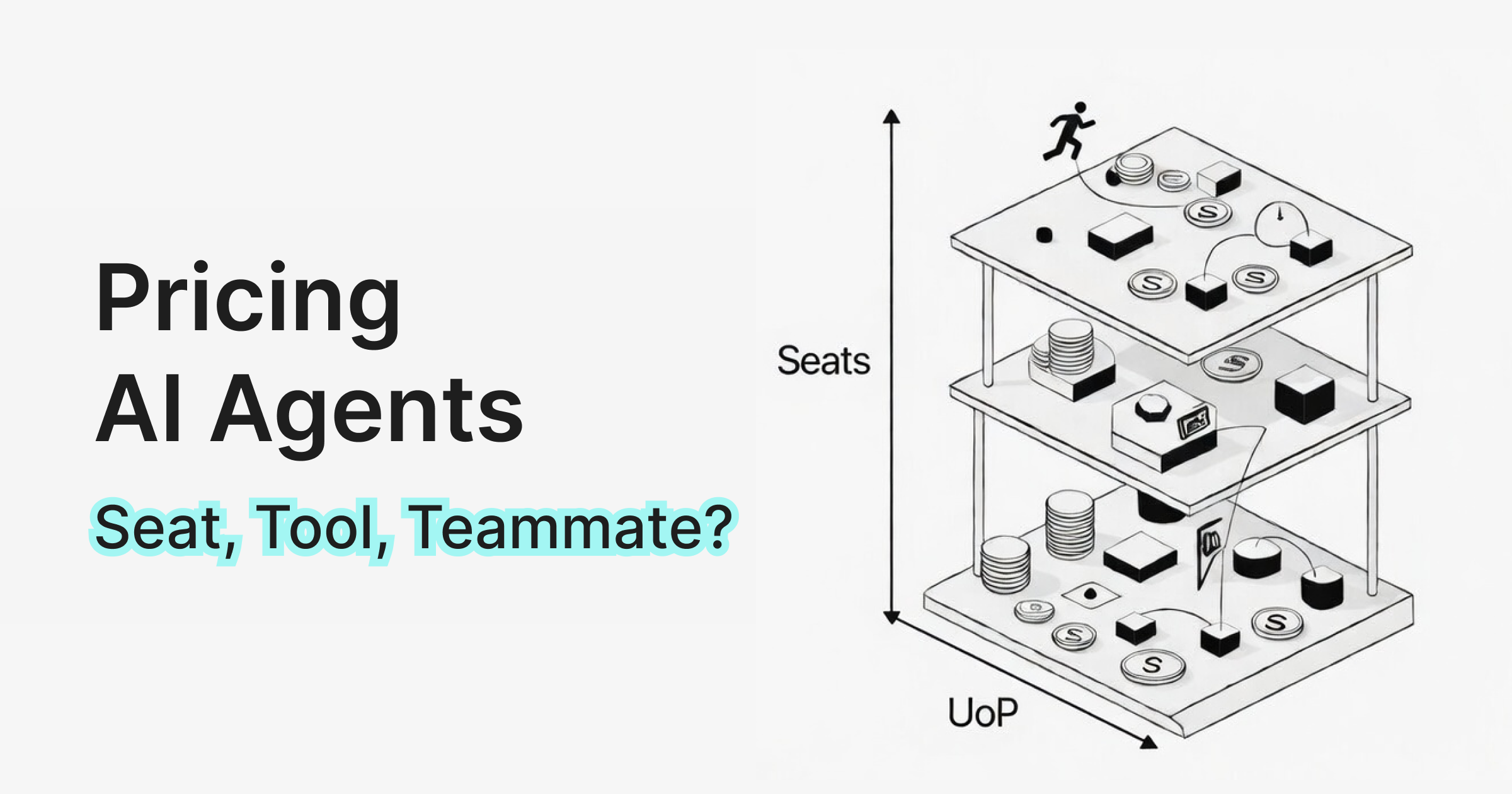
How to Price AI Agents: Seat, Tool, or Teammate?
Most AI agent pricing fails because founders pick a billing model before deciding what their agent actually is. This framework gives you a structured way to classify your agent and match it to the right pricing architecture.
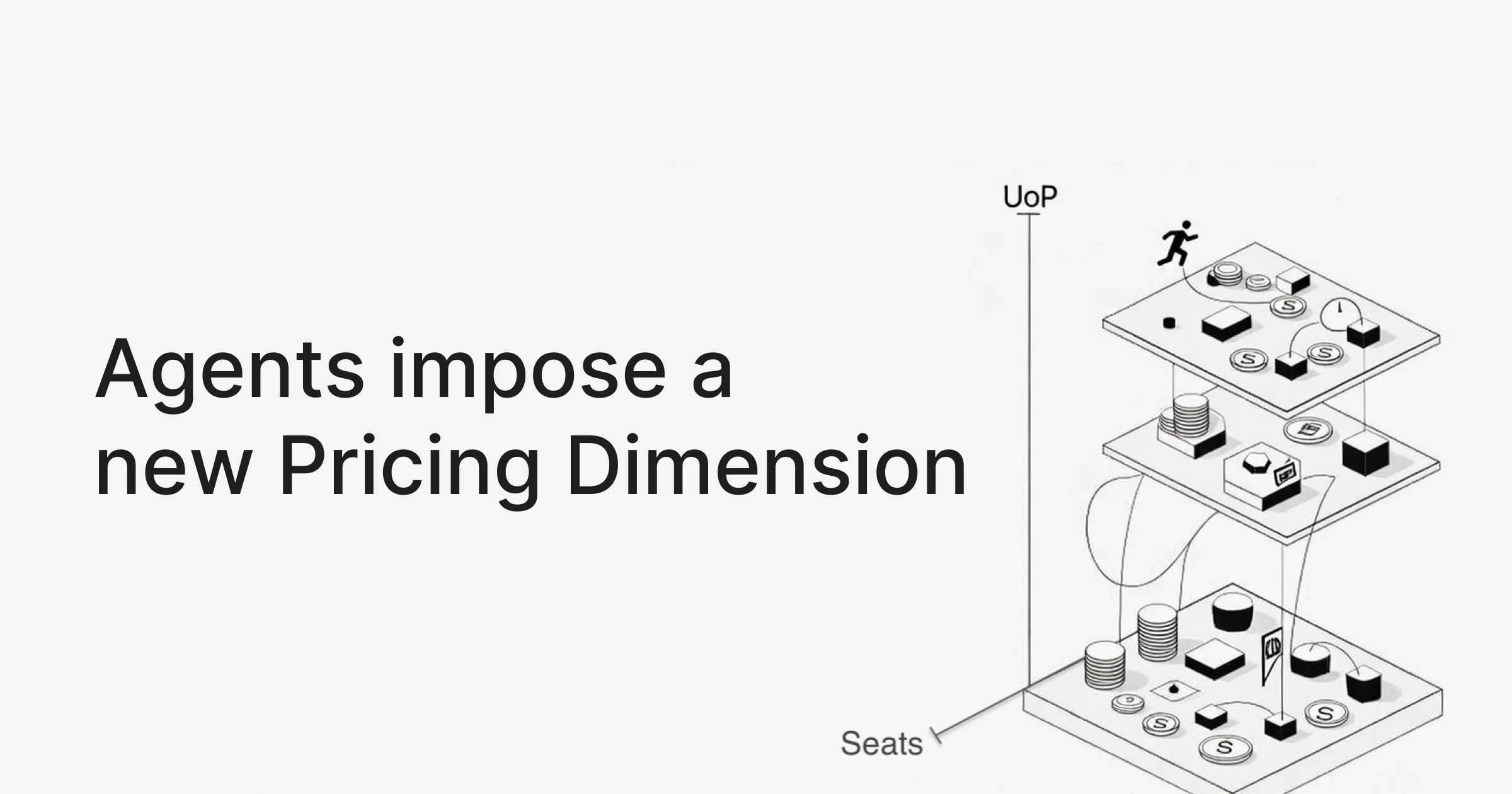
Usage-Based Pricing for SaaS: Credits, Runs, and Beyond
AI broke the per-seat pricing model. Here's why SaaS companies are adopting credits, workflow runs, and hybrid billing, and how to pick the right metric for your product.

Competitive Pricing Strategy: Complete SaaS Guide (2026)
A practical guide to competitive pricing strategy for SaaS founders. Learn frameworks, avoid common mistakes, and build pricing that wins deals.