Credits vs Monthly Pricing: Which Model Fits Your Startup?
Should your SaaS use credits or monthly limits? This guide breaks down both pricing models with real examples and a decision framework for startups.

A reader asked: "What's better between credits pricing and monthly limit pricing? And which one is best for which startup?"
There's no universal answer. The right model depends on your cost structure, customer expectations, and where you are as a business. But there are clear patterns that can guide your decision.
Understanding the Two Models
Before comparing, let's define what each model actually means in practice.
✦ Credit-Based Pricing
With credit-based pricing, customers pre-purchase a bank of credits (sometimes called tokens, units, or points). Each action in your product consumes credits based on its cost or complexity.
How it works:
-
Customer buys 1,000 credits for $50
-
An AI-generated report costs 10 credits
-
A basic export costs 2 credits
-
When credits run out, customer buys more or waits
Examples: OpenAI's API tokens, Jasper AI credits, many design tools, translation services
✦ Monthly Limit Pricing
With monthly limits, subscribers get a fixed allocation that resets each billing cycle. The quota is tied to their plan tier.
How it works:
-
Starter plan includes 100 reports/month for $29
-
Pro plan includes 500 reports/month for $79
-
If you hit the limit, you wait, upgrade, or pay overage
Examples: Notion's block limits, email marketing sends, API rate limits, storage quotas
Credits vs Monthly Limits: Direct Comparison
| Factor | Credit-Based | Monthly Limits |
|---|---|---|
| Revenue predictability | Lower (depends on purchase timing) | Higher (recurring on schedule) |
| Cost alignment | Excellent (scales with your costs) | Good (if costs are stable) |
| Customer experience | Complex (tracking, running out) | Simple (clear monthly quota) |
| Enterprise appeal | Lower (CFOs dislike unpredictability) | Higher (budget-friendly) |
| Expansion revenue | High (natural upsell as usage grows) | Moderate (requires tier upgrades) |
| Churn risk | Lower (sunk cost of unused credits) | Higher (easy to cancel unused sub) |
| Implementation complexity | Higher (credit tracking, notifications) | Lower (simple quota checks) |
When Credit-Based Pricing Works Best
Credits shine in specific situations. If multiple of these apply to your product, consider credits.
⦿ Your Costs Vary Significantly Per Action
AI products are the clearest example. An image generation might cost you $0.02 while a text query costs $0.001. Flat monthly pricing forces you to either underprice heavy users or overprice light users.
Credits let you price each action according to its actual cost, maintaining healthy margins regardless of usage patterns.
⦿ Usage Is Sporadic and Unpredictable
Some products see wildly different usage week to week. A competitive analysis tool might get heavy use during planning cycles, then go quiet for months.
Credits accommodate this naturally. Customers buy when they need, use at their own pace, and don't feel locked into paying monthly for something they use quarterly.
⦿ You're Still Learning Your Cost Structure
Early-stage products often don't know what usage will look like. Credits give you flexibility to adjust pricing without changing everyone's subscription terms.
If you discover a feature is more expensive than expected, you can adjust its credit cost without restructuring your entire pricing page.
⦿ Customers Have Wildly Different Needs
When usage varies 100x between your smallest and largest customers, credits scale naturally. The heavy user spends more credits. The light user spends fewer. No need for 10 different pricing tiers.
If you don't design your product around the price, you're just hoping you'll get lucky.
When Monthly Limits Work Best
Monthly subscriptions with usage limits remain the dominant model for good reasons.
⦿ Your Costs Are Predictable Per User
If serving a customer costs roughly the same regardless of how much they use the product, monthly limits make sense. The complexity of credits adds friction without meaningful benefit.
Collaboration tools, CRMs, and project management software typically fall here. The cost of serving a user is mostly infrastructure that scales with user count, not action count.
⦿ You're Selling to Enterprise
CFOs and procurement teams want predictable costs they can budget annually. Credits create uncertainty: "How much will we actually spend?"
Monthly limits with clear tier pricing make enterprise sales smoother. They can pick a plan, know the annual cost, and move on.
⦿ Simplicity Is a Competitive Advantage
Some markets are dominated by complex, confusing pricing. Being the simple option wins customers.
If competitors use credits and customers complain about tracking and surprise costs, monthly limits become a selling point.
⦿ You Want Maximum Revenue Predictability
Investors and acquirers love predictable MRR. Monthly subscriptions deliver consistent revenue that's easy to forecast and value.
Credits can achieve predictability too (especially with auto-replenishment), but they require more sophisticated modeling.
The Startup Stage Factor
Your company's stage affects which model makes sense.
⦿ Pre-Product-Market Fit
At this stage, you're learning. You don't know your costs, your customers, or their usage patterns.
Recommendation: Start with credits or generous free tiers. Gather data on how people actually use your product before committing to a pricing structure.
Credits give you flexibility to adjust pricing as you learn. Changing "10 credits per report" to "15 credits per report" is easier than restructuring your subscription tiers.
⦿ Post-PMF, Pre-Scale
You understand your product and customers. Now you're optimizing for growth and revenue.
Recommendation: Consider hybrid models or transitioning toward subscriptions with usage tiers.
You have enough data to design tiers that work. You want the revenue predictability to support hiring and growth. But you might keep credits as an overage mechanism or for specific features.
⦿ Scaling
You're growing fast and thinking about enterprise sales, fundraising, or acquisition.
Recommendation: Lean toward subscriptions unless your market strongly expects credits.
Enterprise buyers, investors, and acquirers all prefer predictable recurring revenue. If credits are core to your model, ensure you have strong metrics showing purchase predictability.
The Hybrid Approach
Many successful SaaS companies use both models together.
✦ Base Subscription + Credit Packs
Include a credit allocation with each subscription tier. Heavy users buy additional credit packs.
Example:
- Starter ($29/mo): 100 credits included
- Pro ($79/mo): 500 credits included
- Additional credits: $10 per 100 credits
This gives you predictable base revenue while capturing expansion from power users.
✦ Subscription with Overage Billing
Set monthly limits per tier. When customers exceed limits, charge per-unit overage.
Example:
- Pro plan: 1,000 API calls included, $0.01 per additional call
This simplifies the main pricing while still aligning costs with usage.
✦ Credits for Specific Features
Keep most features unlimited within subscription tiers, but use credits for expensive or variable-cost features.
Example: A design tool might offer unlimited basic editing on subscription, but charge credits for AI-powered features that cost you money per use.
Decision Framework: 5 Questions to Ask
Use these questions to guide your decision:
1. Do your costs scale linearly with usage?
If yes, consider credits or usage-based components. If costs are mostly fixed per user, lean toward subscriptions.
2. How variable is usage between customers?
High variance (100x difference) favors credits. Low variance (most users similar) favors tiered subscriptions.
3. Who are your buyers?
Enterprise and procurement teams prefer predictable subscriptions. Developers and technical users are often comfortable with credits.
4. What does your market expect?
If competitors all use credits (like AI APIs), credits won't surprise anyone. If your market uses subscriptions, credits might feel foreign.
5. How important is revenue predictability right now?
Raising funding or planning major growth? Subscriptions provide cleaner metrics. Still experimenting? Credits offer flexibility.
Real Examples: How Top SaaS Companies Choose
Looking at how successful companies structure their pricing reveals patterns.
Credits Model Leaders
-
OpenAI: Tokens (credits) for API usage. Makes sense because costs vary dramatically between a 10-token query and a 4,000-token generation.
-
Jasper AI: Credits for AI content generation. Heavy users (agencies) naturally spend more than occasional users.
-
Canva: Credits for premium features like AI image generation within an otherwise subscription-based product.
Monthly Limit Leaders
-
Notion: Subscription with block limits (recently relaxed). Works because their costs don't scale heavily with blocks.
-
Mailchimp: Subscription tiers based on contact count and sends. Predictable costs for predictable usage patterns.
-
Slack: Per-seat subscription. Each user costs roughly the same to serve.
Hybrid Leaders
-
HubSpot: Subscription base plus usage-based charges for marketing contacts and certain features.
-
Snowflake: Subscription for platform access plus consumption-based compute charges.
-
Twilio: Pay-as-you-go credits layered with committed-use discounts for predictable buyers.
Common Mistakes to Avoid
☒ Making Credits Too Confusing
If customers need a calculator to understand what things cost, you've failed. Keep credit costs simple. Round numbers. Clear documentation.
☒ Setting Limits Too Low
Monthly limits that most users hit feel punishing. If 30% of your users are hitting limits, your tiers are wrong.
☒ Ignoring the Transition Path
If you start with credits and later want subscriptions (or vice versa), you need a migration plan. Grandfather existing customers. Provide clear value for the change.
☒ Forgetting Enterprise Needs
Even if credits work for SMB, you might need subscription options for enterprise. Don't lose big deals because procurement can't handle credits.
What About Your Competitors?
Before finalizing your pricing model, research how competitors approach this. You don't need to copy them, but you need to understand market expectations.
Check their pricing pages. What model do they use? How do they structure limits or credit costs? What does the market seem to accept?
Understanding competitive pricing patterns helps you make informed decisions rather than guessing.
What is credit-based pricing in SaaS?
What is monthly limit pricing?
Which pricing model is better for AI-powered products?
Can I combine credits and monthly subscriptions?
Which model do investors prefer?
Summary: Making Your Decision
There's no universally "better" model. The right choice depends on your specific situation:
✓ Choose credits if: Your costs vary per action, usage is unpredictable, you're early-stage learning patterns, or your market expects credits (AI, APIs)
✓ Choose monthly limits if: Costs are stable, you're selling to enterprise, simplicity matters, or you need maximum revenue predictability
✓ Choose hybrid if: You want base revenue predictability with expansion upside, or you have some features with variable costs
The best pricing isn't about what's theoretically optimal. It's about what your customers understand, what aligns with your costs, and what helps you build a sustainable business.
Learn how to gather and analyze pricing data to make better pricing decisions.
Compare tools that help you track and analyze competitor pricing strategies.
Build comprehensive CI reports that include pricing model analysis and competitor comparisons.
Related Posts
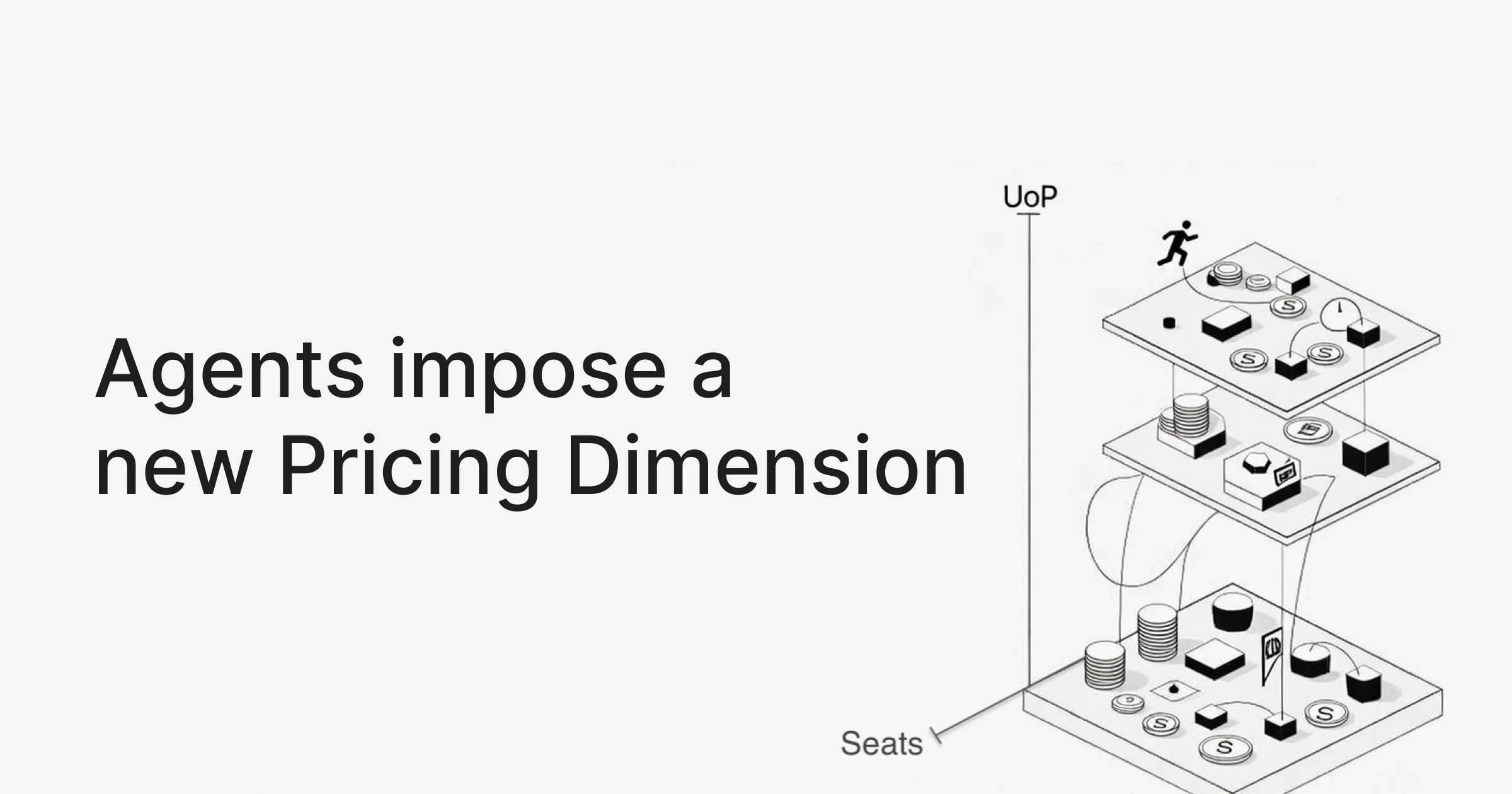
Usage-Based Pricing for SaaS: Credits, Runs, and Beyond
AI broke the per-seat pricing model. Here's why SaaS companies are adopting credits, workflow runs, and hybrid billing, and how to pick the right metric for your product.

Competitive Pricing Strategy: Complete SaaS Guide (2026)
A practical guide to competitive pricing strategy for SaaS founders. Learn frameworks, avoid common mistakes, and build pricing that wins deals.

Competitive Pricing Tools: Complete Guide for SaaS (2026)
Learn what competitive pricing tools are, key features to evaluate, and how to use them effectively for SaaS pricing strategy.